Five GPUs in a gaming PC.
My local LLM rig
Zero server parts. An ordinary home-built PC that also plays games, with five GPUs crammed in using every slot plus riser cables, for 80GB of VRAM. Every local LLM in AutoDev LG runs on this one machine.
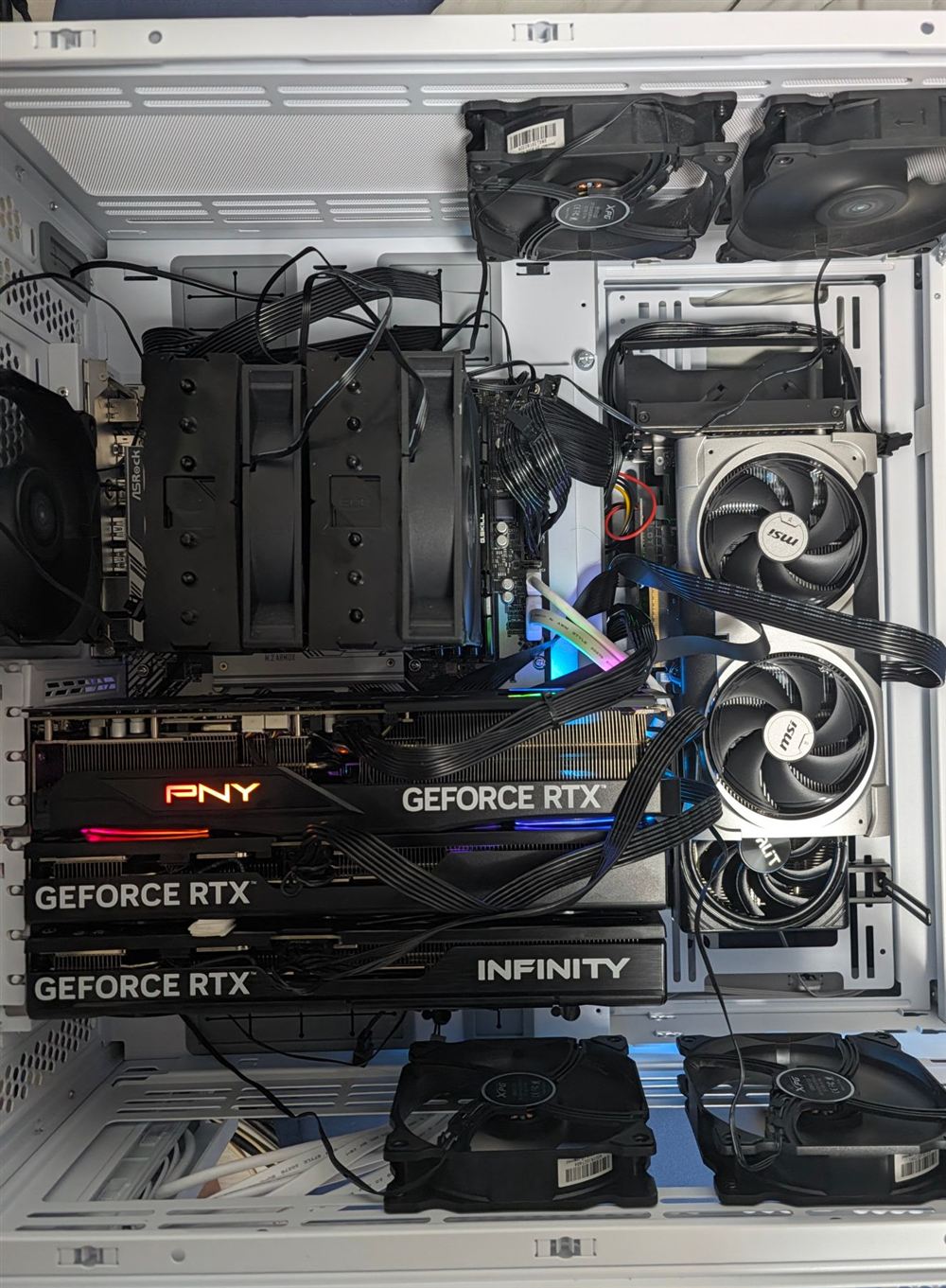
As for the cable management — please pretend you didn't see it.
01Hardware
| Part | What's in it | Note |
|---|---|---|
| CPU | Intel Core i9-14900KF (24 cores / 32 threads) | Bought for gaming. All 32 threads used from WSL |
| Memory | 128 GB (DDR4, 32 GB × 4) | About half (62 GB) is given to WSL |
| Motherboard | ASRock B760 Pro RS/D4 WiFi | A regular gaming board — server boards were out of reach |
| Case | LIAN LI O11D EVO XL | Swapped in to fit five GPUs. Shockingly huge when it arrived |
| GPU bracket | LIAN LI O11DEXL-1X (vertical GPU bracket, an option made for the O11D EVO XL) | Used to mount the GPUs connected by riser cables |
| Power supply | Thermaltake TOUGHPOWER GT 1200W (ATX 3.1, PS-TPT-1200FNFAGJ-3) | The five GPUs' power limits add up to 1,020 W, but in practice the whole PC stays within 750 W even at full load |
| Storage | NVMe SSD 2 TB × 2 + USB HDD 6 TB | Models live on NVMe (loading from USB is much slower) |
| Network | I-O DATA ET10G-US3C (USB Type-C 10-gigabit LAN adapter, Realtek chip) | With the PCIe slots taken by GPUs, there was nowhere left for a 10G NIC, so it runs over USB — plugged into the front USB 3.2 Gen2 Type-C port, the only 10Gb/s USB port on this board. Link speed: 10 Gbps |
02The five GPUs
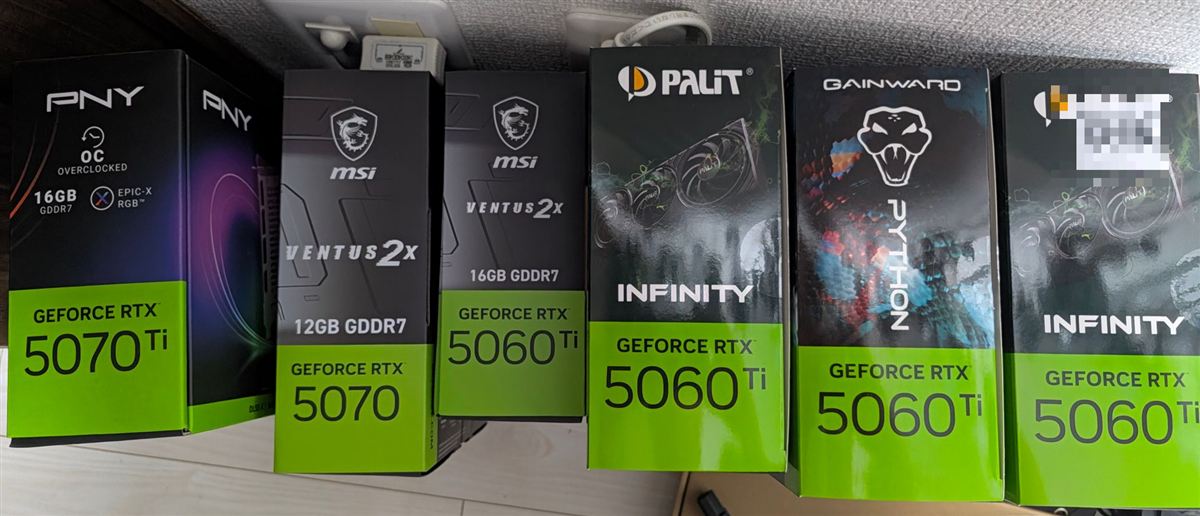
That many boxes in just over a month. I've lost it.
...Oh. There's a spare 5070 lying around...
Three cards plug straight into PCIe slots. The two that didn't fit go through riser cables (PCIE2, and M2_2 — an M.2 slot). As a result, every card has a different link width.
| GPU | Slot | VRAM | Power limit | Link (measured) |
|---|---|---|---|---|
| RTX 5070 Ti | PCIE1 | 16 GB | 300 W | x16 direct |
| RTX 5060 Ti ① | PCIE2 | 16 GB | 180 W | x1 riser |
| RTX 5060 Ti ② | PCIE4 | 16 GB | 180 W | x1 direct |
| RTX 5060 Ti ③ | PCIE3 | 16 GB | 180 W | x4 direct |
| RTX 5060 Ti ④ | M2_2 | 16 GB | 180 W | x2 riser (M.2 adapter) |
The four RTX 5060 Ti cards come from MSI (VENTUS 2X), Palit (INFINITY) × 2 and GAINWARD (PYTHON). Zero sense of uniformity.
"Link" is the current lane count reported by the NVIDIA driver. The five power limits add up to 1,020 W.
Which GPU sits in which slot?
Using the motherboard layout and block diagram, we matched the PCI locations Windows reports against each link's measured width. The bar length is the lane count (x1–x16).
Slot names follow the ASRock B760 Pro RS/D4 WiFi manual.
For MoE models, it does (dense models are covered in section 04 below). AutoDev LG splits one model across all five cards by layers (llama.cpp's "layer split"). That way, during generation the GPUs only pass small data at the layer boundaries, so even thin links run reasonably well. Where the thin links really show is when a model is being loaded.
Watch out for tensor parallelism, though. Splitting each layer across several GPUs makes them exchange data constantly, and on this setup performance collapses completely. Few people will build something this eccentric, but consider yourself warned.
03Software
| Layer | What runs | Note |
|---|---|---|
| OS | Windows 11 Pro + WSL2 (Ubuntu 24.04.5 LTS) | A Windows-native version was tried too, but it was slow on long contexts, so it went back to WSL |
| GPU stack | NVIDIA driver 617.14 / CUDA 13.3 | |
| Inference engine | llama.cpp official (build 11151) + Unsloth build (build 11160) | The Unsloth build is for Qwen3.8-Flash-Next's MTP; the other models use the official build |
| Language | Python 3.12 | AutoDev LG itself is written in Python |
| Workflow | LangGraph 1.2 | Runs the steps in order and decides where to go back when something fails |
| AI agent | OpenHands SDK 1.46 | An open-source platform for autonomous AI software-engineering agents. The worker's local LLM edits files and runs commands through it |
04The models
One model at a time is loaded across all five GPUs. Every time the role changes the model is swapped, which means reading tens of gigabytes again.
| Model | Type | Role | Quantization · size | Speed-up (MTP etc.) |
|---|---|---|---|---|
| Qwen3.8-Flash-Next | MoE | Leader / worker | AP-Q4_K_XL · 95 GB | MTP head (separate file · Q8_0 · 3.9 GB) |
| Qwen3.8-27B | Dense | Writing test code | UD-Q4_K_M · 16 GB | MTP (built into the model) |
| Gemma-4-26B-A4B-it | MoE (about 4B of 26B active) | Reviewer | BF16 · 48 GB | MTP helper model (Q8_0 · 0.4 GB) |
| gpt-oss-120b | MoE | Backup | MXFP4 · 60 GB | EAGLE3 (Q8_0 · 0.8 GB) * |
Dense models (which use every weight for every token) don't perform when split across several GPUs on this setup. The bottleneck is PCIe bandwidth: the thin x1 and x2 links, and the DMI Gen4 x4 that four of the five cards share through the chipset, get choked.
With an MoE (Mixture of Experts) model, the total parameter count can be large, but only a few "experts" work on each token. Gemma-4-26B-A4B-it, for example, uses about 4B of its 26B parameters each time (the "A4B" in its name).
So what runs here is almost all MoE: Qwen3.8-Flash-Next, Gemma-4-26B-A4B-it and gpt-oss-120b. Dense models are used only when they fit in a single GPU's VRAM (16 GB). The one dense model here, Qwen3.8-27B, is sized to fit that rule (and gets a further boost from MTP). If "80 GB of VRAM" made you think "big dense models, then?" — sorry, this is an MoE-only machine.
Dense: a model that uses every one of its weights for every token. The classic, most common design.
MoE (Mixture of Experts): a model with many "experts" inside that uses only a few of them for each token. The total parameter count can be large while the amount of work per token stays small.
MTP (Multi-Token Prediction): predicts several tokens ahead instead of just the next one, and the main model checks them all at once. Because the main model checks every token, the output doesn't change.
* gpt-oss-120b has no MTP layers, so it gets an add-on helper model using a different method built on the same idea, called EAGLE3.
Context length is 65,536 tokens, the KV cache is compressed to 4 bits (q4_0), and Flash Attention is on. What the speed-ups bought us is in the tuning log.
05Also
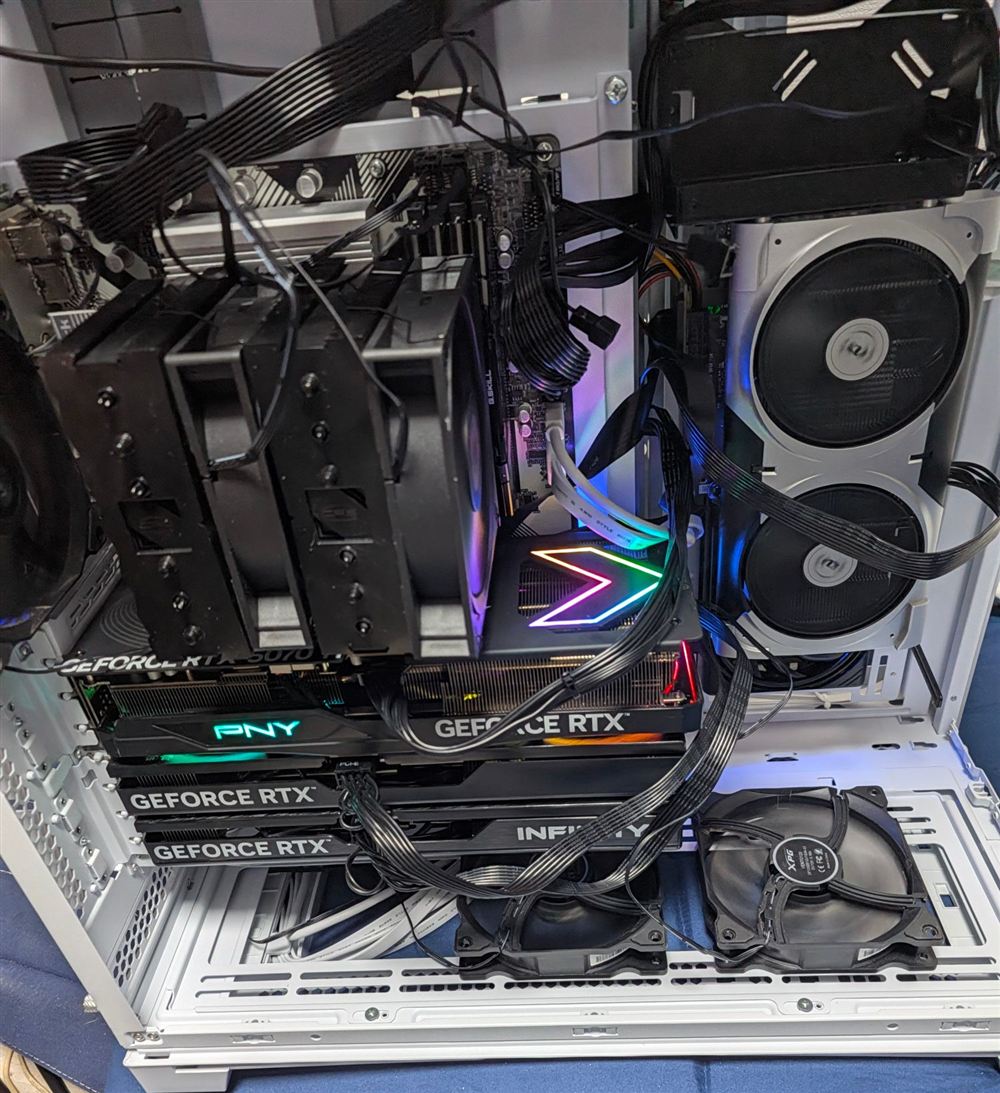
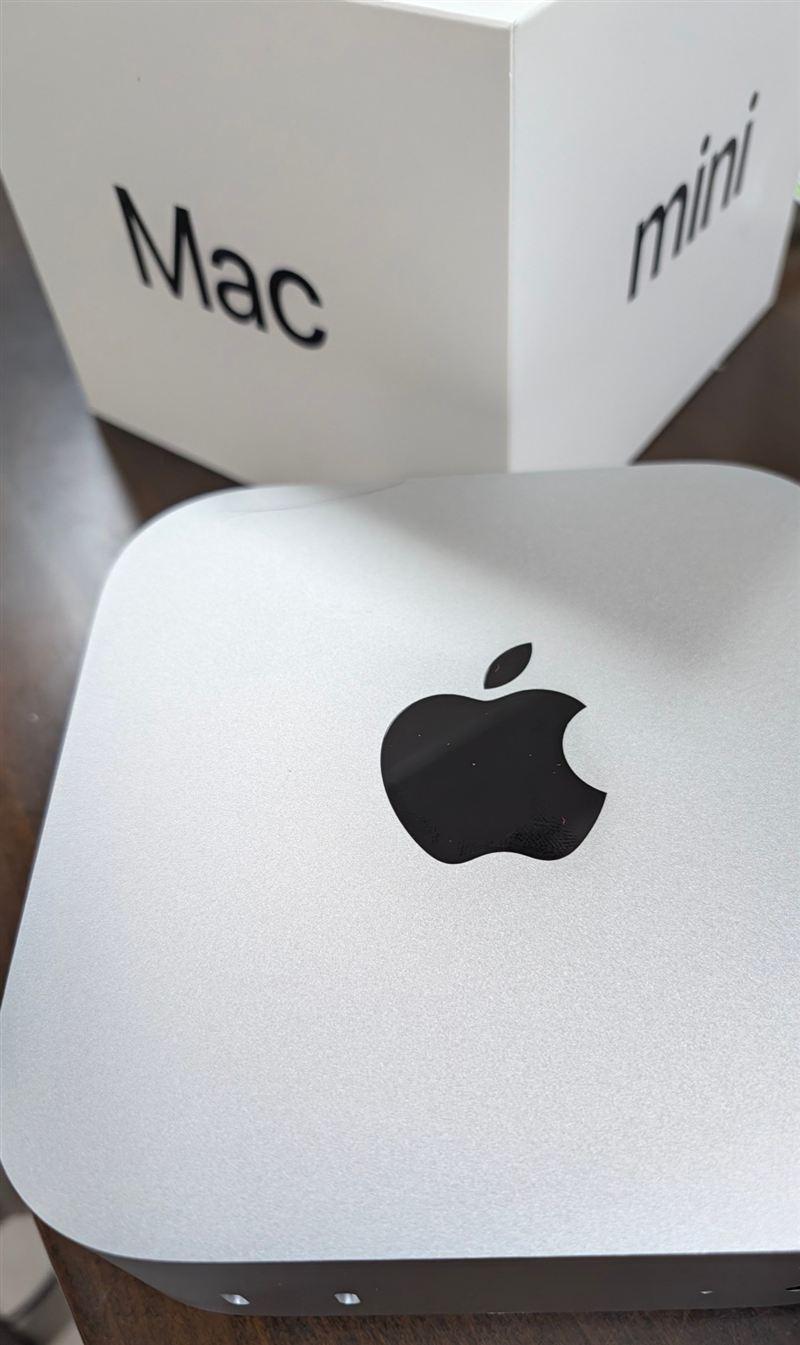
There's an M6 Mac mini (base model) too. "I'll need it to make iPhone apps someday," I told myself. ...So far it hasn't been used once (lol).
How much of the GPU cost has paid for itself (what if it all ran on the Claude API?) is updated daily on the payback meter in the dev log.
See the dev log →How it works →